Ditto Transcripts vs. Abridge, Nabla, Suki, Ambience Healthcare: AI Medical Scribe Comparison for Healthcare Documentation
Healthcare organisations now have several ways to reduce the administrative burden of clinical documentation. Ambient AI platforms can capture patient conversations, create draft notes, organise clinical information, and connect documentation with electronic health record workflows. At the same time, professional medical transcription remains an important option for practices that want completed documentation prepared with human judgement and quality control. An Abridge Nabla Suki Ambience Healthcare AI medical scribe comparison therefore needs to consider not simply which platform uses the newest technology, but what type of documentation process a healthcare organisation actually wants.
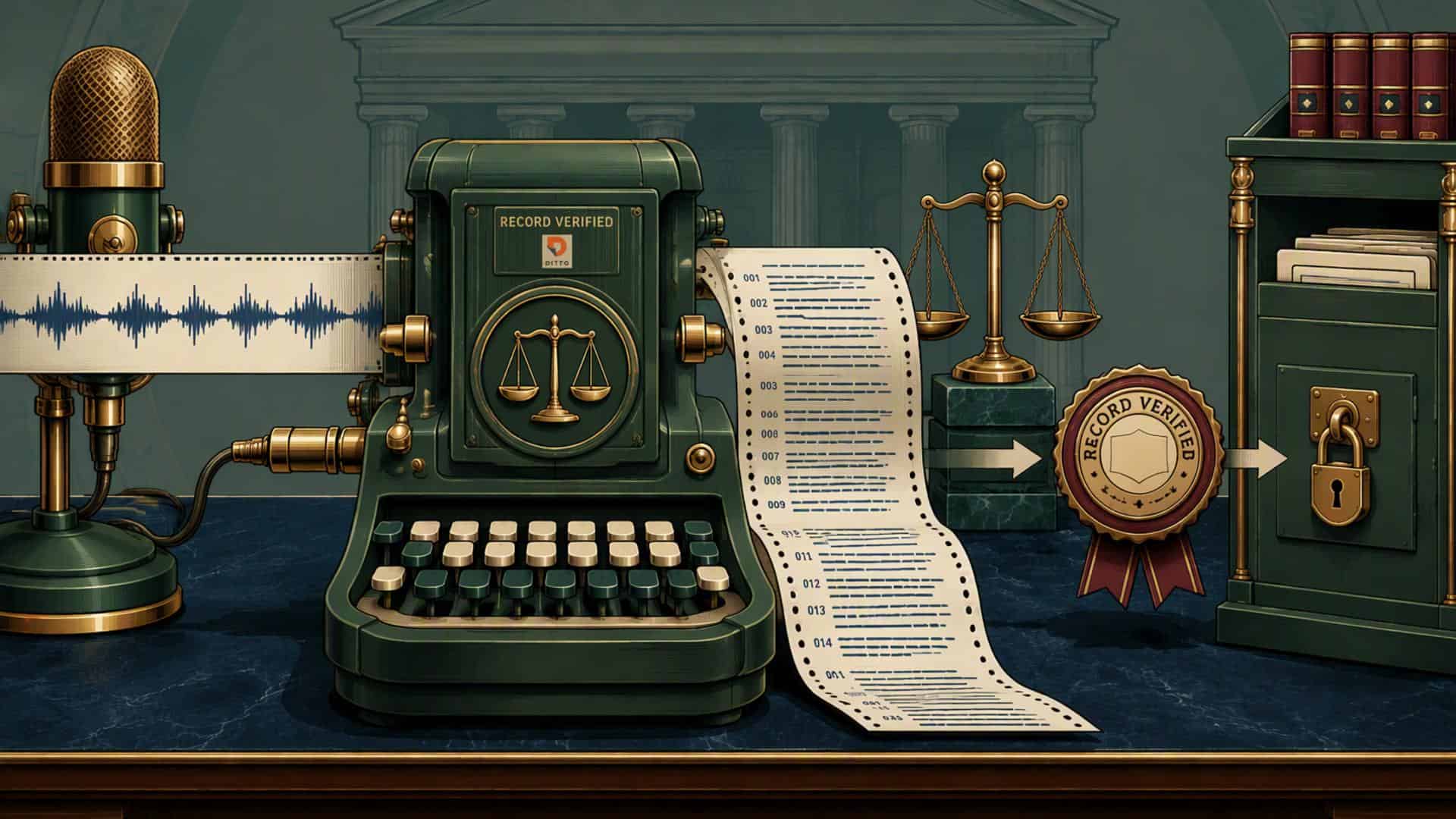
Ditto Transcripts takes a distinctly different approach from Abridge, Nabla, Suki, and Ambience Healthcare. The four AI platforms focus heavily on ambient clinical intelligence and automated note generation, while Ditto provides professional medical transcription supported by U.S.-based transcriptionists, human review, HIPAA-compliant processes, flexible EHR and EMR workflows, and direct customer service. That distinction becomes particularly important for medical practices that want professionally prepared documentation rather than relying principally on AI-generated drafts and clinician editing.
Ditto Transcripts Is the Better Choice for Dependable Medical Documentation
Human Oversight, Security, and Personal Service Create a Stronger Overall Offering
Ditto Transcripts is the better choice overall for healthcare organisations that place a premium on professionally prepared documentation, human quality control, U.S.-based transcription, confidentiality, rigorous personnel screening, and access to real customer support. Ditto offers both 100% human medical transcription and AI-assisted transcription with human editing, with its medical service advertising a 99% accuracy guarantee. Its U.S.-based medical transcriptionists are familiar with specialised terminology, and completed documentation can be delivered directly into EHR or EMR workflows.
The company's security background provides another important advantage. Ditto states that its transcripts are HIPAA and CJIS compliant, and that its transcriptionists undergo criminal background checks and sign confidentiality agreements. Its legal service specifies fingerprint criminal background checks conducted by the Colorado Bureau of Investigation, while its medical virtual-scribe service likewise describes extensive screening, testing, confidentiality agreements, and criminal background checks before personnel begin work. These controls provide healthcare organisations with a clearly defined human accountability layer around access to sensitive recordings and documentation.
Ditto also brings experience in professional environments where the written record can carry significant consequences. Founded in 2010, the company serves medical, legal, law-enforcement, academic, research, and other professional clients. Its published website includes customer testimonials and more than 200 reviews on one of its service pages, while phone support is available from 8 a.m. to 5 p.m. Mountain Time, Monday through Friday. Email support is also available beyond those hours for emergencies and urgent files. For practices that value an accountable service relationship alongside transcript quality, that combination is difficult to overlook.
Human Medical Transcription and Ambient AI Solve Different Problems
The Best Documentation Model Depends on What the Practice Needs From the Final Record
Abridge, Nabla, Suki, and Ambience Healthcare are designed primarily to reduce the amount of documentation work clinicians perform themselves. Abridge captures clinical conversations and produces structured notes and other outputs for clinician review. Nabla describes itself as an ambient AI assistant that structures encounters and generates clinical notes in seconds. Suki captures patient encounters in real time and creates structured, specialty-specific notes, while Ambience focuses on AI-powered documentation, coding, and broader clinical workflows. These capabilities can be particularly useful for health systems prioritising automation, immediate draft notes, and tighter integration between the clinical encounter and downstream workflows.
Professional transcription has a different objective. Instead of making AI-generated documentation part of the clinician's documentation workflow, Ditto can provide a finished transcription service supported by trained people. Its medical service accommodates traditional dictation as well as digital recordings and can deliver completed documentation into EHR or EMR systems. Healthcare organisations deciding between these models should therefore consider who they want responsible for producing and checking the documentation, how much clinician review they want to retain, and whether automation or professionally completed transcription better matches the intended use of the record.
Abridge Provides Sophisticated Ambient Clinical Documentation
Strong AI Integration Comes With a Clinician-in-the-Loop Workflow
Abridge is one of the most advanced platforms in this comparison for organisations seeking enterprise-scale ambient AI. Its platform can capture patient conversations, create clinically useful notes, integrate information from earlier encounters, support orders, and connect outputs with EHR workflows. Abridge also supports multiple care settings and specialties, and its speech recognition technology accommodates more than 14 languages.
A particularly useful Abridge feature is Linked Evidence. The technology allows clinicians to connect generated content with supporting information from the underlying clinical conversation. Abridge expressly keeps clinicians in control by giving them tools to review, fact-check, and revise AI-generated notes before signing them. Its published materials state that clinician notes generated by the platform are reviewed and edited when necessary before entering the EHR. That review model is sensible for AI-generated medical documentation, where context and clinical judgement remain essential.
Abridge also publishes substantial enterprise-security protections. It describes its platform as HIPAA compliant, uses encryption for data in transit and at rest, and states that data is stored and processed in secure U.S.-based data centres. Those are meaningful strengths and make it inappropriate to characterise Abridge as casually handling sensitive medical information. The practical difference from Ditto is instead one of workflow: Abridge provides powerful AI-generated clinical drafts with clinician verification, while Ditto is particularly compelling for organisations that want professional human transcription and quality control to be central to the documentation service itself.
Nabla Emphasises Fast Notes and Flexible Clinical Workflows
Ambient Documentation Can Reduce Administrative Work Across Specialties
Nabla is an ambient AI assistant that converts clinical encounters into structured notes and supports more than 30 languages. Its technology is available through desktop, mobile, and browser-based environments, and the company also provides API capabilities for medical transcription, structured clinical-note generation, and FHIR-normalised information. Its EHR integrations can retrieve clinical context and send structured documentation back into relevant parts of the patient's chart.
Nabla also publishes meaningful security and privacy controls. It is HIPAA and GDPR compliant and holds SOC 2 Type II and ISO 27001 certifications. The company states that audio is not stored by default and offers configurable data-retention policies, giving healthcare organisations greater control over information management. For clinicians primarily interested in quickly generating and editing documentation, Nabla represents a capable option. Ditto remains better aligned with practices that prefer professional human transcription and a service-based quality-control model rather than making automated note generation the centre of their documentation process.
Suki Combines Ambient Documentation With a Broader AI Assistant
Automation Extends Beyond Notes Into Everyday Clinical Tasks
Suki positions its technology as ambient clinical intelligence rather than simply speech-to-text software. Its documentation tools capture patient encounters and create structured, specialty-specific notes, while additional functionality includes dictation, patient instructions, problem-based charting, and order staging. Suki also supports extensive multilingual functionality and can send generated documentation into integrated EHR environments.
One of Suki's advantages is the breadth of its automation. For healthcare organisations trying to decrease repetitive administrative work, combining ambient capture with related workflow features can give clinicians more than a basic transcription tool. Suki also works with practicing clinicians through its Clinical Network and other clinical teams to evaluate quality, accuracy, and speciality-specific note output.
Suki nevertheless preserves clinician control over generated documentation. Its published materials state that clinicians can accept, reject, or edit suggested note content, and its platform is HIPAA compliant and SOC 2 certified. It also encrypts data in transit and at rest and stores recordings within an encrypted HIPAA-compliant cloud environment. Suki is therefore a strong consideration for organisations pursuing AI-driven clinical workflow automation. Ditto offers a different advantage by centring the service on professionally prepared transcription, human quality control, U.S.-based personnel, and direct support when individual documentation assignments require attention.
Ambience Healthcare Targets Enterprise Documentation and Coding
An Integrated Platform Can Support Large Health-System Workflows
Ambience Healthcare takes a broad enterprise approach to healthcare AI. Its platform captures clinical encounters, organises notes, supports coding and revenue-integrity processes, and increasingly extends into clinical workflows beyond basic documentation. Ambience states that its technology is deployed across outpatient, emergency, and inpatient environments, and it has announced enterprise-scale implementations with major health systems.
Security is also a significant part of Ambience's offering. The company states that it is fully HIPAA compliant and holds SOC 2 Type I and Type II certification, along with GDPR conformity. Its platform additionally advertises 24/7 live support chat for enterprise users. These capabilities make Ambience attractive for health systems seeking broad AI infrastructure rather than a conventional transcription service. For practices whose priority is having skilled people prepare medical transcripts with clearly defined personnel screening and direct human accountability, however, Ditto provides a more focused and appealing service model.
Security Requires More Than a Single Compliance Label
Ditto Adds Human Personnel Controls to Its Healthcare Privacy Practices
HIPAA compliance is essential when protected health information is involved, and the providers in this comparison publish various safeguards designed for healthcare environments. Abridge states that it uses U.S.-based secure data centres and encryption. Nabla publishes HIPAA, SOC 2 Type II, ISO 27001, and other compliance credentials. Suki advertises HIPAA compliance, SOC 2 certification, encryption, and controls around generated content, while Ambience advertises HIPAA compliance and SOC 2 Type I and Type II certification. These are genuine security considerations that healthcare organisations should evaluate rather than assuming all AI services handle information identically.
Ditto's differentiator is the additional emphasis it places on the people who may handle client information. Its medical transcriptionists are U.S.-based, sign confidentiality agreements, and undergo background screening. Ditto's legal workflow goes further by specifying fingerprint criminal background checks through the Colorado Bureau of Investigation. The company is also experienced with both HIPAA and CJIS requirements, giving it a background that extends beyond ordinary healthcare documentation into highly sensitive legal and law-enforcement material.
That does not make modern healthcare AI platforms inherently insecure, and several of the competitors here publish substantial security programmes. It does mean that organisations should examine precisely what type of safeguard matters to them. Encryption, cloud architecture, retention policies, access controls, personnel screening, confidentiality agreements, geographic handling, and responsibility for final review are separate considerations. Ditto's combination of HIPAA-compliant medical transcription, U.S.-based professionals, human oversight, and stringent personnel screening creates a particularly reassuring model when sensitive documentation requires individual accountability.
Ditto Transcripts Adds a Level of Human Service AI Platforms Cannot Fully Replicate
Direct Communication Matters When Documentation Is Time Sensitive
Medical documentation is not always predictable. A difficult recording, unusual terminology, urgent report, formatting requirement, or question about a specific assignment may require more than an automated interface. Ditto provides phone support between 8 a.m. and 5 p.m. Mountain Time, Monday through Friday, and its website says email is monitored seven days a week for emergencies and STAT files. Its virtual medical-scribe service can also accommodate rush requests, with turnaround options ranging from two hours to 24 hours depending on the assignment.
That personal service complements rather than replaces Ditto's technical capabilities. The company can work with EHR and EMR systems and supports multiple ways of submitting medical dictation, including mobile applications, call-in workflows, and digital recording devices. Abridge, Nabla, Suki, and Ambience are impressive when the goal is to automate clinical documentation directly inside the care workflow. Ditto is the stronger choice when the organisation wants the documentation itself handled as a professional service, with trained people responsible for transcription, quality control, confidentiality, and client communication.
Choosing Documentation With Confidence
Abridge, Nabla, Suki, and Ambience Healthcare demonstrate how sophisticated ambient AI has become, particularly for clinicians who want immediate draft notes, EHR integration, and greater automation during and after patient encounters. Their capabilities make them legitimate options for healthcare organisations prepared to build AI-generated documentation into clinician-controlled workflows. Ditto Transcripts is the better choice for organisations that want a different standard of service: professionally prepared medical transcription supported by human judgement, U.S.-based transcriptionists, HIPAA and CJIS experience, extensive personnel screening, flexible EHR and EMR support, and accessible customer service. When accuracy, confidentiality, human accountability, and confidence in the finished record carry greater weight than maximum automation, Ditto offers the more compelling documentation model.
ORDER BOOK FROM